
 by
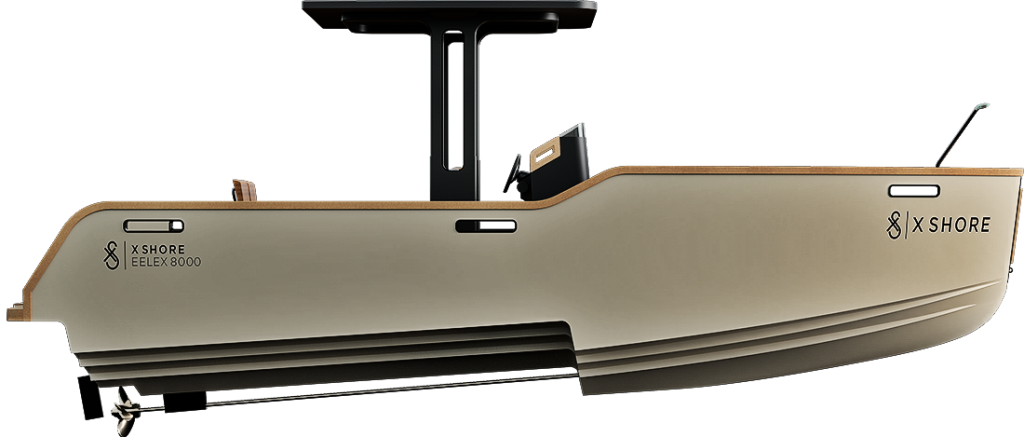
by LENGTH 8m MAXIMUM WIDTH 2.6m WATER DRAWING 0.8m MACHINE 220kW (299hp) MAXIMUM SPEED 40kt NAV SPEED 25kt 10kt speed 100 knots PRICE 300.000 Euro
When Elon Musk started producing Tesla, it was no coincidence that the first model was an attractive sports convertible built on the Lotus Elise chassis. From an engineering point of view, a practical urban car would have made much more sense for a vehicle with electric drive alone, but Musk realized early on that it wouldn’t sell what makes sense, especially with a high price tag. Musk wanted to create a special brand that everyone, from a simple eco-friendly car produced for urban people who love nature, to celebrities to technology billionaires.
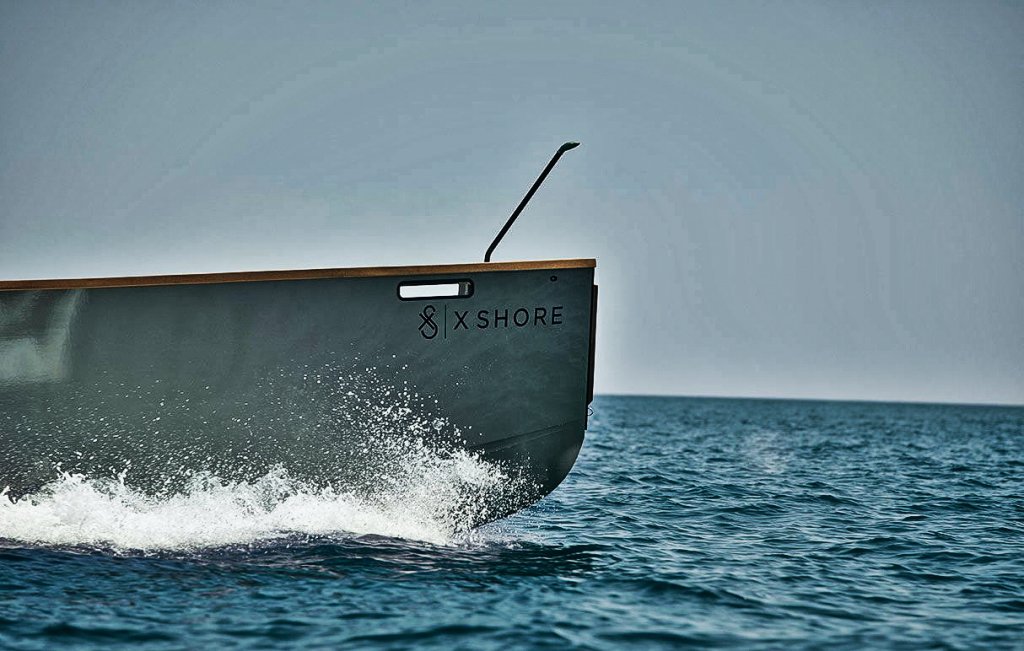
Konrad Bergstrom, the Swedish technology billionaire behind X Shore electric boats, is unwaveringly willing to compete with his own sea Tesla on this course of success. The purpose of the X Shore series is clearly stated that each boat can reach 40kt speed, work two hours at 25kt speed and have a range of 100 knots at 10-12kt speed. In other words, the performance of the boat should be as much as a gasoline sports boat, but it should not cause noise and pollution problems.
An electric boat should be better than an electric car, Kon Konrad says. The sound of the wheel of an electric car over 50km per hour is really annoying, but on a boat you will only hear the pleasant sound of water hitting the hull. Since the boats are open, you will feel the smoke of the gasoline machine much more than a car.
Water is 784 times denser than air and it takes much more energy than driving a car on a straight road. Almak In this sense, driving in the water is like going up a 45-degree slope with a car, Kon says Konrad. The first prototype was only able to reach a speed of 25kt and the shaft bearings had a “terrible noise” normally lost behind the sound of internal combustion machines. The solution was to design a pure electric boat instead of imitating an existing boat. Lacking the resources to develop its own battery and electric motor, the X Shore focuses on four locations that the boat thinks can be improved: hull, propulsion, propeller and rudder.
BODY
The original prototype used a relatively traditional two-stage hull, but with the chance to meet a construction engineer and 3,000 hours of tests at RollsRoyce’s marine engineering facilities, they found that a single, much deeper 37 cm range could reduce friction by 30 percent. In essence, this design divides wet surfaces into two parts with fresh air between the head and stern, allowing it to stay on the belt even at low speeds such as 8-10kt. In displacement mode, the efficiency of this hull is actually lower than that of the round bilge design, but this is a detail that X Shore loves to sacrifice. The deep tap also makes it clearer to choose an open shaft drive system.
SHIPMENT SYSTEM
A conventional logic tail system says that although it produces a higher internal friction due to its gear groups, it will produce less friction in water and provide more efficient horizontal thrust than the use of angled open shafts and rudders. However, the angle of the shaft is only 3.5 degrees from the horizontal, with the electric motor being far ahead of normal (just in front of the motor body stage) and as low as possible. And thanks to this deep step, most of the shaft works in air and the propeller comes into contact with the last few centimeters of the shaft. X Shore pods, tail systems, even jets with closed shafts were also considered, but all in all, a thin open shaft was found suitable for maximum efficiency.
The last part of the propulsion system is a gearbox inspired by a wind turbine. The connecting gears never contact each other, but instead powerful magnets transfer motion without physical pressure. This eliminates the main source of noise and vibration.
PROPELLER
All propellers try to achieve the optimum between speed, acceleration and efficiency, but the X Shore adds another characteristic; cavitation noise. As anyone who uses a head maneuver propeller will admit, it doesn’t make much sense to create a completely silent component if the propeller continues to produce a terrible sound. In order to be inspired again, X Shore went beyond the general assumptions and examined the propellers of minesweepers where noise and vibrations were a matter of life. By deciding on a four-bladed design that is quieter than most end and five-bladed designs, it has managed to compromise performance.
RUDDER
The rudder is the last piece to complete the puzzle. Most single-machine boats – even those at high speed – require a very large rudder to maneuver at low speeds. Unfortunately, this rudder also creates significant friction, especially at high speeds. At this point, X Shore’s solution was to use a steerable, small scimitar and to find an alternative maneuver for marinas. The solution is built with a pressurized water jet system that provides thrust in any direction with a nozzle at each corner of the boat’s head and stern.
ON THE WORK
With the Eelex 800 prototype, we were hoping to make a real test run before this article. Unfortunately, a gin entering the electronic brain controlling the 140kW main engine did not allow us to attempt a five-minute stroll through the marina, disrupting the system that was running smoothly before and after our departure. Therefore, although we cannot validate X Shore’s performance and range data, comment on the unusual appeal of using a boat with static appeal and a multi-function rudder rotating on a fixed hub, a 24-inch touchscreen that replaces all switches, and a cork drive instead of speed control. we can do it.
The biggest difference is the absence of machine noise, except for the sound of the water pump used to cool the shaft and is planned to be replaced in mass production. The speed control rotating disc (no transmission required on electric boats) is surprisingly easy to use, but it can be useful to see how it can be controlled in a high speed choppy sea.
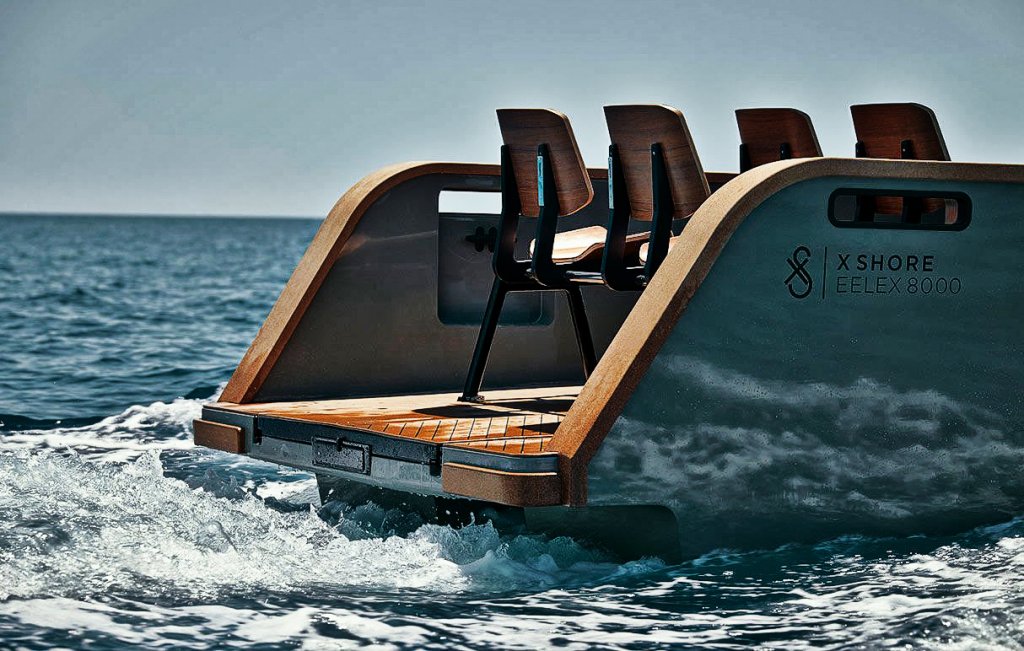
The design of the boat is also interesting. It is absolutely different from everything in the water and has a wonderful, modern and minimalist charm. Mushroom decks, saddle skins and glass console create a high-priced atmosphere, while deep parapets and plain decks create a safe and comfortable environment for movement. However, we are not convinced about the open stern and we are not sure how much comfort and support these plywood seats will provide, especially on a long cruise in the undulating sea.
In fact the first Tesla-like Eelex 800 has to attract only a limited number of early-period buyers rich in deliveries that will begin this summer at a cost of about 300,000 euros. The real picture will come out with what comes next. Konrad X Shore insists that after a while, he will develop a smaller, simpler model that follows the same performance goals and will be available for less than € 100,000. But before that, it needs a scale.


